
Road Repair

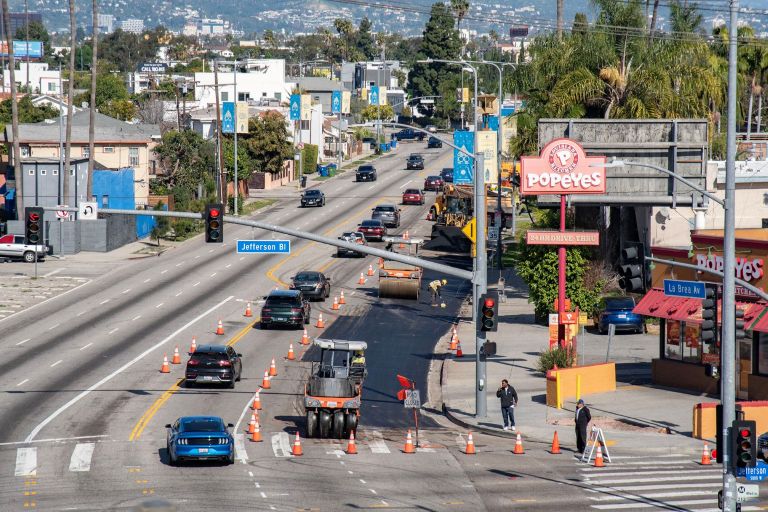
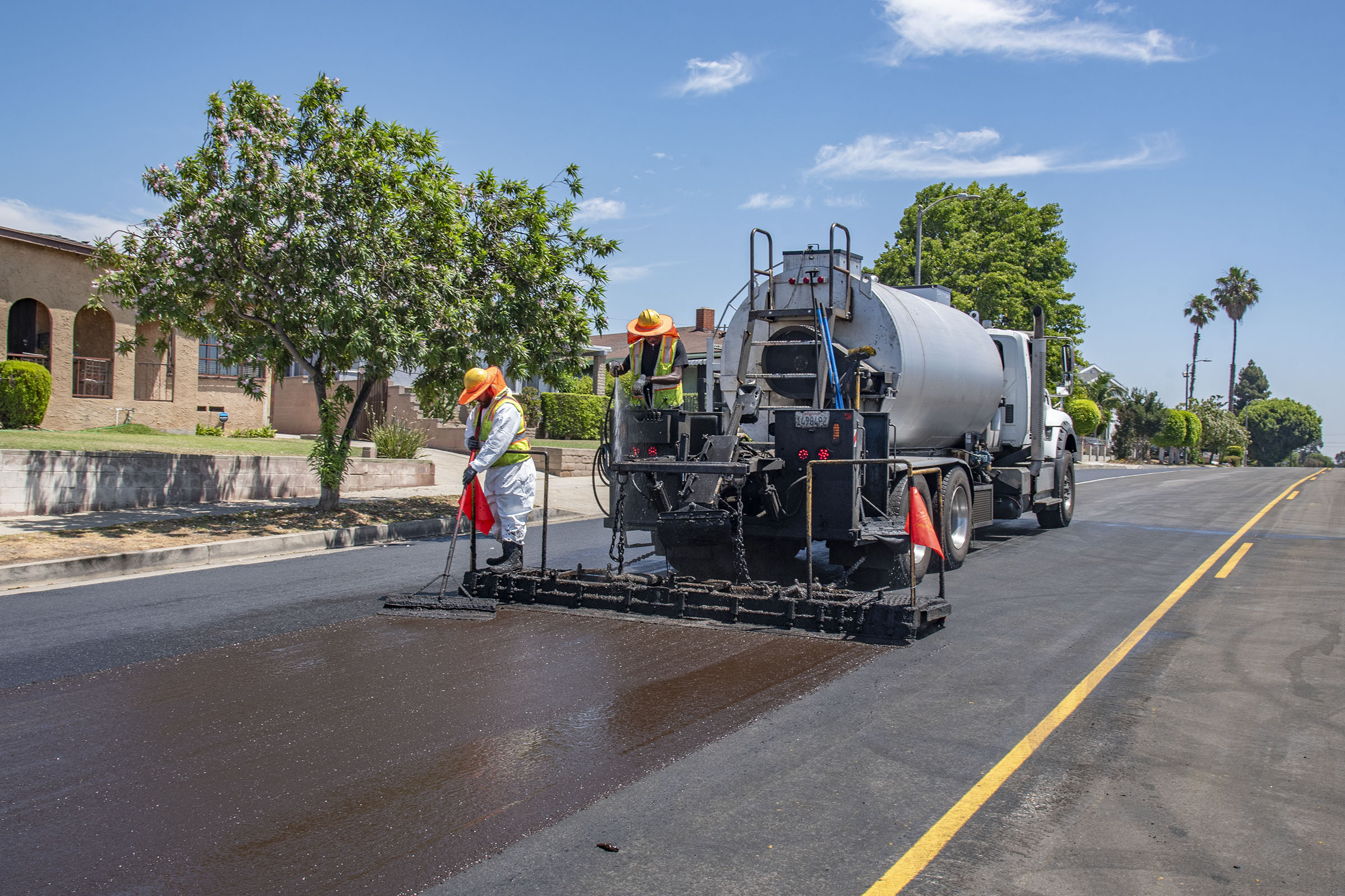
StreetsLA’s Pavement Preservation Program (PPP) includes different treatments that help maintain the City’s 23,000 lane miles of streets: resurfacing, large asphalt repairs, and slurry seal.
Resurfacing involves comprehensive repaving of streets. Crews remove the top layer of worn asphalt and replace it with a new layer in order to extend the useful life of the roadway. Resurfacing occurs, on average, every 15 to 20 years for “select streets” (which are major arterial streets and corridors) and 25 to 30 years for “local streets” (which are typically residential streets). Resurfacing is considered an alteration per the United States Department of Transportation (USDOT), and requires ADA-compliant access ramps to be installed prior to resurfacing.
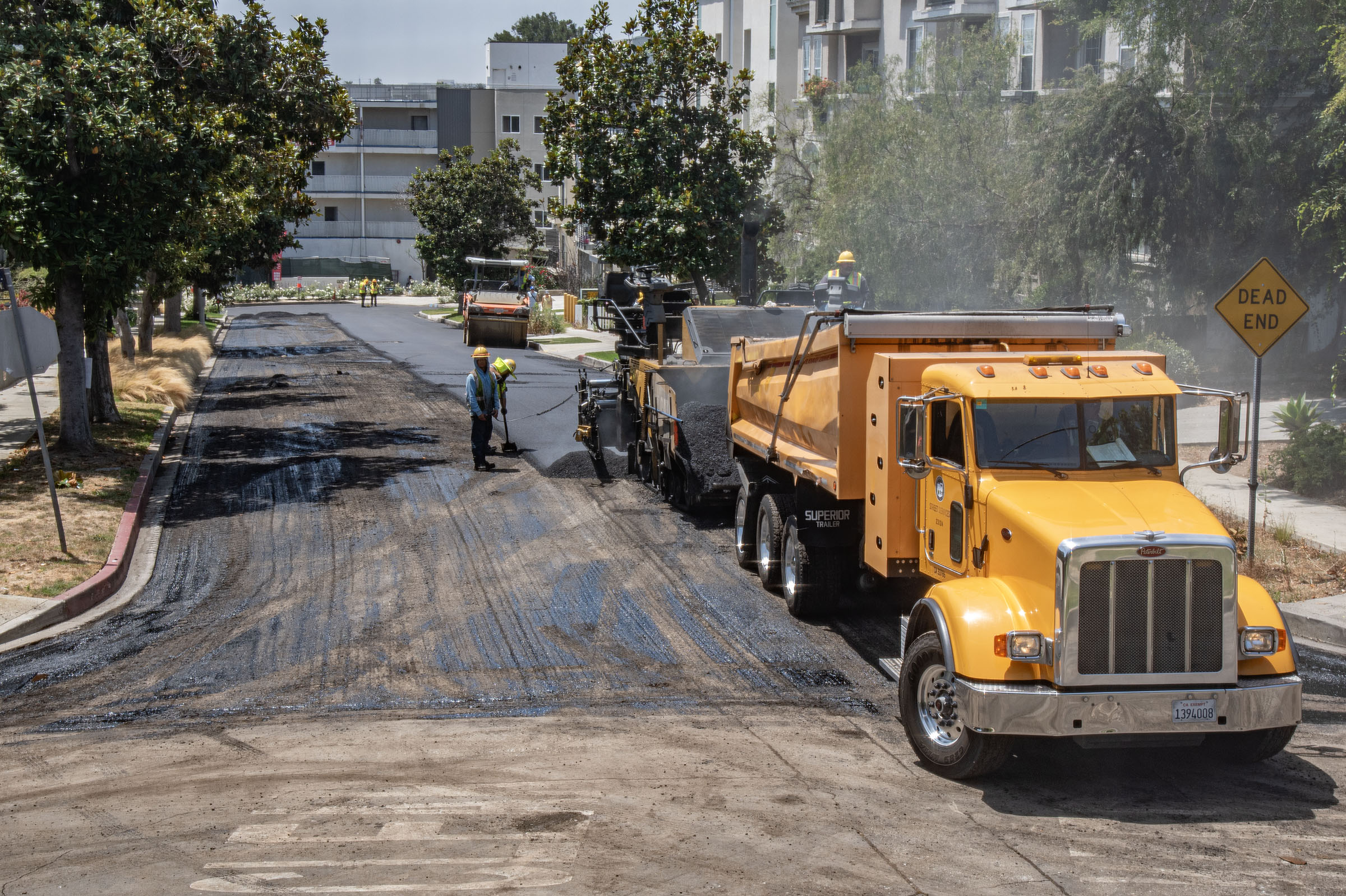
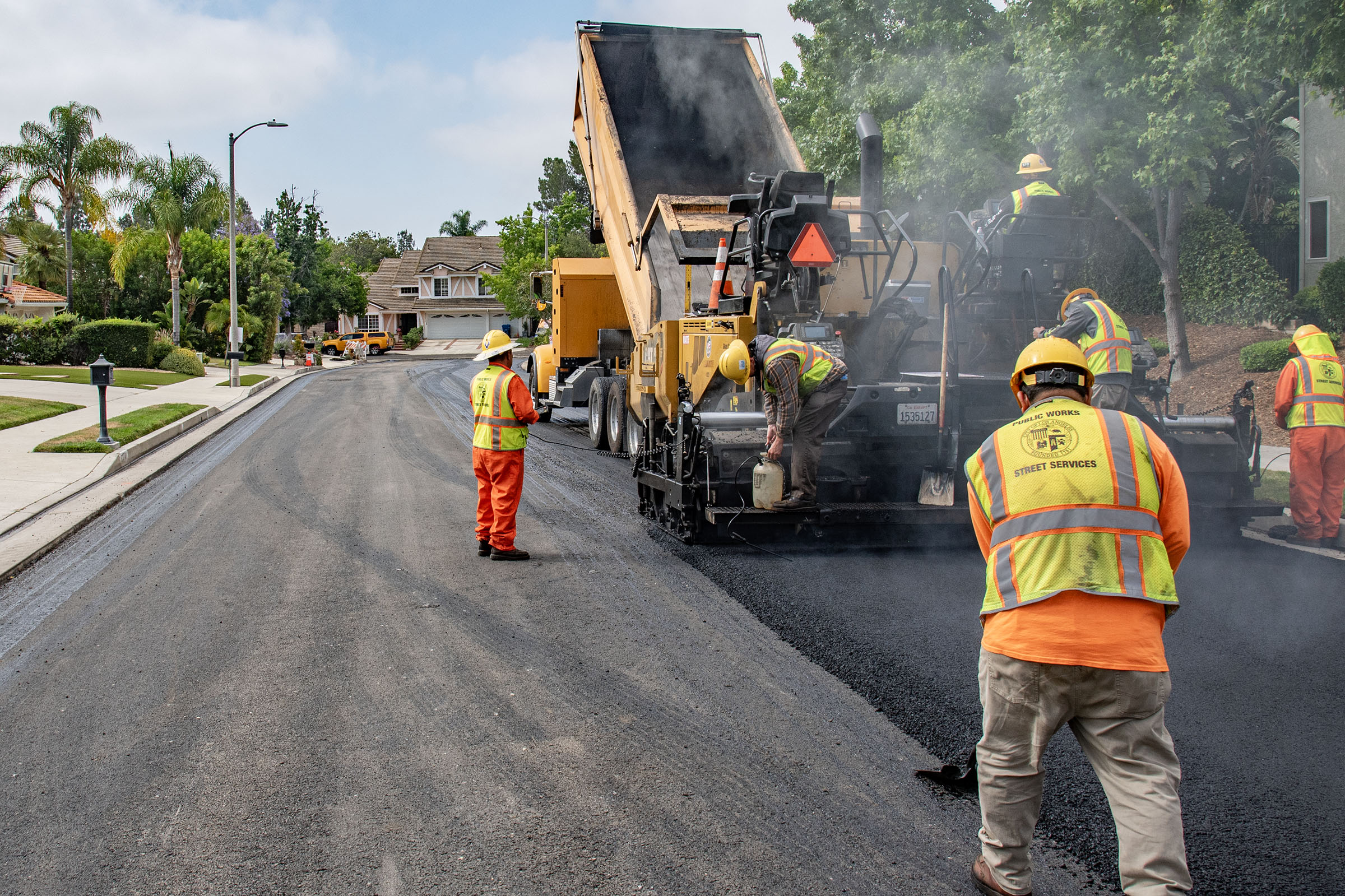
Large Asphalt Repairs (LAR) or "patching," refer to the localized repair of distressed pavement in which a relatively isolated portion of the street is in poor condition but the rest of the street remains in good condition. LARs are corrective maintenance measures that are common on major corridors that receive a high volume of traffic from heavy vehicles. LARs are targeted interventions that remove the distressed areas to prevent further deterioration of the top wearing surface and pavement structure, and help bring the failed street segment back into a state of good condition.
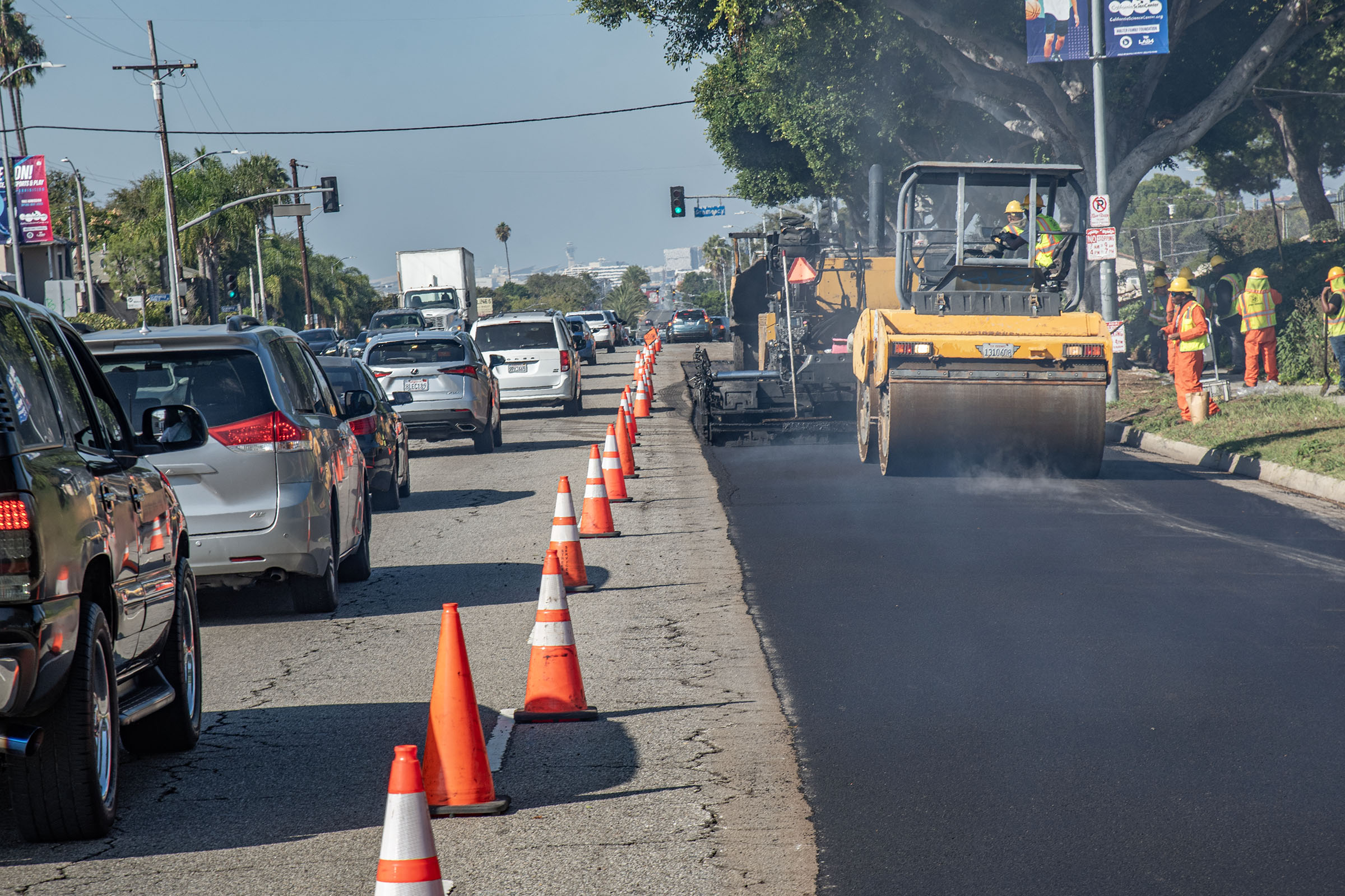

Slurry seal is a “maintenance coat” for qualified corridors, primarily residential streets. This treatment occurs, on average, every 3 to 7 years after a street has been resurfaced in order to prevent water penetration into the asphalt. This maintenance coat is a cost-effective treatment aimed at extending the useful life of roadways that are already in fair to good condition.